
The sun is shining, windows are wide open, and you’re making the most of spring. But did you know that this season can actually put your indoor air quality under pressure? Ventilating your home is important, of course – but it also allows pollen, fine dust, and other invisible pollutants to drift inside. And that’s not even counting seasonal allergies like hay fever, which tend to peak around now.
Don’t worry. With a few smart adjustments, you can improve the air quality in your home and breathe easy again.
Be smart about ventilating
Fresh air is essential, but timing is everything. In the early morning or on still days, pollen levels are usually lower. Air your home briefly but effectively, especially if you live near a busy road or are sensitive to allergens. Leaving a window slightly open overnight can help too – just make sure the outdoor air is actually cleaner than what’s inside.
Tackle dust and damp at the source
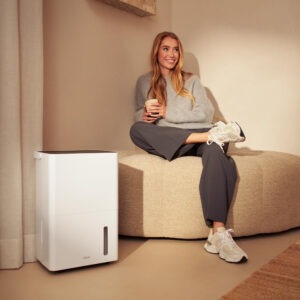
One of the biggest culprits behind poor indoor air quality? Dust build-up and excess moisture. Regular vacuuming (ideally with a HEPA filter), wiping surfaces with a damp cloth, and airing out mattresses can make a big difference. Keep an eye on damp-prone areas like bathrooms and cellars, these can be hotspots for mould growth. Notice a musty smell or condensation on the windows? That’s often a sign your air quality needs attention. In cases like these, a dehumidifier such as Bora is a great solution. It tackles the root cause by reducing moisture, helping to prevent mould, condensation and stale smells at their source.
Measure it to manage it
You can’t see it. You often can’t smell it. But it’s there: poor indoor air quality. Think pollen, fine dust, VOCs (volatile organic compounds), and mould spores. Want to know exactly what you’re breathing in? Try using an indoor air quality monitor or hygrometer like the Sense. This compact gadget gives you real-time insights into temperature and humidity levels: smart, stylish and simple to use.
Use an air purifier in the bedroom or living room
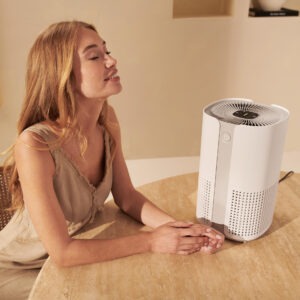
An air purifier is probably the most effective way to improve your indoor air quality – especially in spring, when hay fever symptoms are at their worst and you’re more sensitive to airborne particles like pollen and dust. A smart model like the Bright 2 Smart Air Purifier filters up to 99.97% of airborne pollutants thanks to a triple-layered system (HEPA H13 + activated carbon). It automatically adjusts to air conditions via a PM2.5 sensor, and operates whisper-quiet – making it ideal for use as a bedroom air purifier. And thanks to the Duux app, you’ll always know exactly how your air is doing, and you can control the Bright 2 from your smartphone or with a voice assistant.
Be aware of seasonal triggers
Spring brings a lot of positives, but it also means peak pollen. May, in particular, is notorious for grass pollen, which can really aggravate allergies. Got pets? They might be bringing extra pollen inside too. Try to keep shoes, coats and furry friends out of the bedroom, and wash soft furnishings regularly. Remember: what floats around outside often ends up indoors – unless you take action.
In short: fresh air requires smart choices
Poor indoor air quality is often an invisible issue – but it can have serious effects. From fatigue and allergies to respiratory problems, the air you breathe plays a huge role in how you feel day to day. The good news? A few simple changes can make a big difference: ventilate wisely, keep your home clean, track your air levels, and use a purifier like Bright 2 to help protect your space.