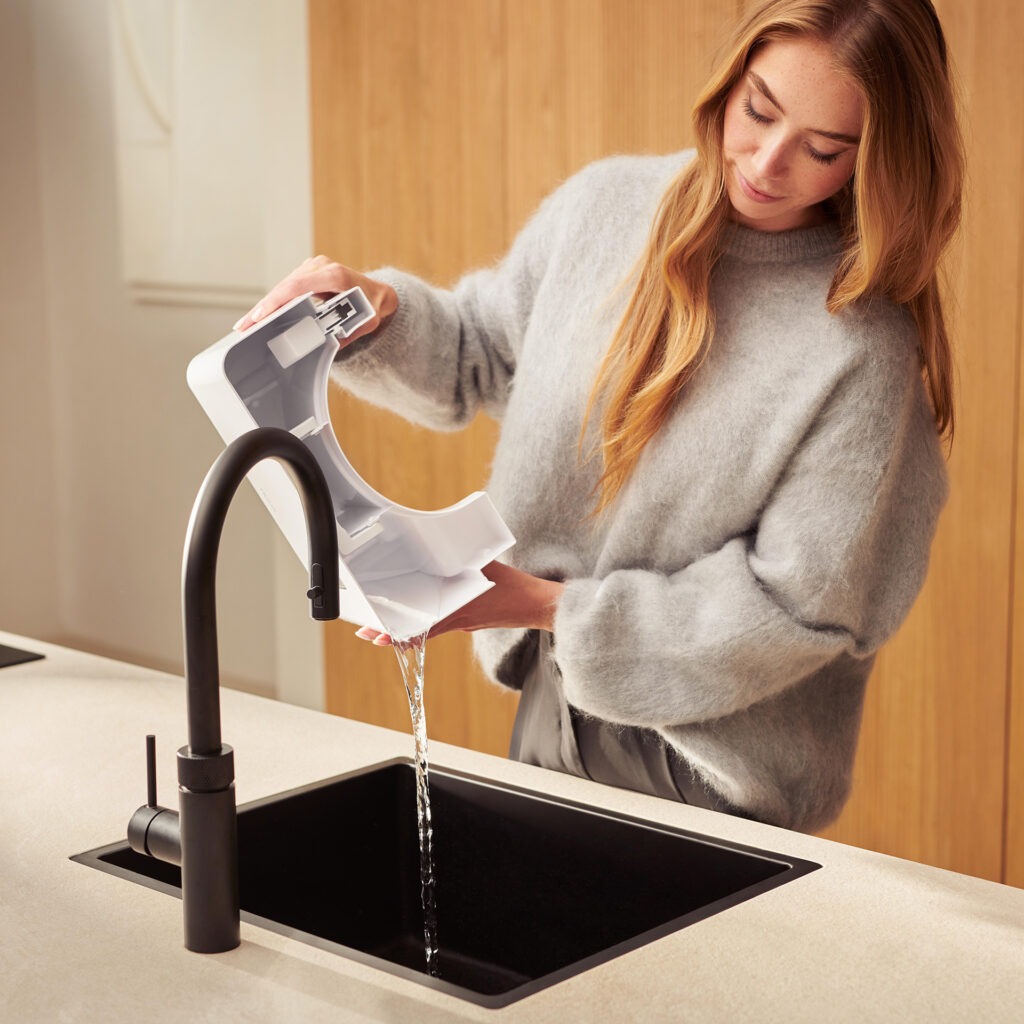
Moisture in the home, most of us have encountered it. Think condensation on your windows, a musty smell in the basement, or laundry that never seems to dry. In many cases, high humidity levels are to blame. And it’s not just inconvenient, it can also lead to unhealthy conditions like mould growth and dust mites. Thankfully, there’s a smart and effective solution: a dehumidifier. But how exactly does a dehumidifier work? And when should you use one? We’ll explain everything in this blog.
What does a dehumidifier do?
A dehumidifier removes excess moisture from the air. Put simply, it draws in damp air, extracts the moisture which is collected as water, and then releases dry air back into the room. This process lowers humidity levels, making your space more comfortable and healthier. Ideal for damp areas like basements, bathrooms, or laundry rooms.
How Does a dehumidifier work, technically speaking?
Most modern dehumidifiers, including many energy-efficient models, use a compressor-based system. This method uses a refrigerant to extract moisture from the air:
- Drawing in damp air: A fan pulls the air into the unit.
- Condensation: The air passes over cold coils, causing the moisture to condense.
- Water collection: The water is stored in a tank or drained via a hose.
- Dry air release: The now-drier air is released back into the room.
Many units, like the Bora Smart Dehumidifier from Duux, come equipped with a built-in hygrometer. This lets you set your desired humidity level (typically between 40% and 60%), after which the device adjusts automatically to maintain it.
When should you use a dehumidifier?
There are plenty of everyday situations where a dehumidifier is incredibly useful:
- Basements: Basements are naturally more humid due to ground moisture. A dehumidifier prevents mould and that familiar musty smell.
- Bathrooms: No windows or poor ventilation? You’ll likely struggle with lingering steam and damp patches on walls or ceilings. A dehumidifier keeps things dry and fresh.
- Cooler rooms: Cold air holds less moisture, which causes excess humidity to condense on surfaces. High humidity can worsen allergies or make a room feel stuffy. A dehumidifier helps create a more pleasant climate in living rooms or bedrooms.
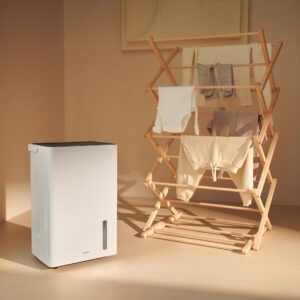
- Laundry rooms: Using a dehumidifier with a dedicated laundry-drying mode speeds up drying and is far more energy-efficient than a traditional tumble dryer. Now that’s smart drying!
How long should a dehumidifier be on? Use a humidifier
That depends on your space, the temperature, and how humid it is. Most devices work best in auto mode, switching on or off based on real-time humidity levels. If you’re dealing with particularly high humidity, like after a shower or while drying laundry, you can use the continuous mode temporarily. Many models also include a timer function, giving you full control over how long the unit runs.
What makes a good dehumidifier?
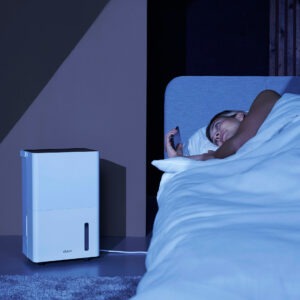
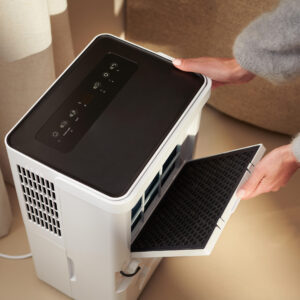
A good dehumidifier should be quiet, energy-efficient, user-friendly, and powerful enough for the space it’s used in. The Duux Bora ticks all the boxes. Available in 20L or 30L capacity, it features a whisper-quiet night mode at just 36 dB, app control via the Duux app, a carbon filter to neutralise odours, and even a self-cleaning function: practical and hygienic.
Conclusion: A dehumidifier Isn’t a luxury, It’s a must-have in damp spaces
High indoor humidity can lead to health issues, mould, and general discomfort. This is especially true during colder, wetter months when moisture tends to linger. A good dehumidifier offers an effective solution: whether it’s for a damp basement, a warm bathroom, or a laundry room where clothes just won’t dry. And with smart, quiet and efficient models like Bora, creating a healthier home has never been easier!